
-
 info@arablabels.com
 - August 14, 2026
- No Comments

A product label does much more than display a logo or product name. It communicates important information, supports regulatory compliance, improves inventory management, and often creates the first impression customers have of a brand. Choosing the right label printing company in Dubai is therefore a business decision that can influence everything from operational efficiency to customer trust.
In a market like the UAE, where businesses compete across retail, logistics, manufacturing, food, cosmetics, and industrial sectors, labels must perform well under demanding conditions while meeting local regulatory requirements. A supplier that simply prints labels may not be enough. The right partner understands materials, printing technologies, compliance standards, and the practical challenges businesses face every day.
If you’re evaluating printing partners, these are ten factors worth considering before making a decision.
1. Industry Experience and Understanding
Every industry has different labelling requirements. A warehouse may need durable barcode labels that scan consistently, while a food manufacturer requires bilingual labels with ingredient information and expiry dates. Cosmetic brands often prioritise premium finishes, whereas industrial businesses focus on durability and chemical resistance.
An experienced label printing company in Dubai should understand these differences and recommend solutions that match your specific application instead of offering a one-size-fits-all approach.
Working with a supplier that has experience across multiple industries also reduces the likelihood of production delays, compliance issues, or unsuitable material choices.
2. High-Quality Materials That Suit UAE Conditions
Dubai’s climate presents unique challenges for printed labels. High temperatures, humidity, refrigerated storage, and outdoor transportation can affect adhesive performance and print durability if unsuitable materials are used.
Rather than choosing labels based only on price, businesses should ask about:
- Waterproof and moisture-resistant materials
- Heat-resistant label stocks
- Adhesives suitable for different surfaces
- Scratch-resistant laminations
- Labels designed for indoor or outdoor applications
Selecting the right combination of material and adhesive helps maintain product presentation while reducing replacement costs over time. Professional label providers usually recommend materials based on where and how the product will be stored, transported, or displayed.
3. Compliance with UAE Labelling Requirements
For many businesses, especially those operating in food, healthcare, cosmetics, and retail, compliance is just as important as design.
Product labels in the UAE often need to include mandatory information such as product descriptions, country of origin, manufacturing and expiry dates, ingredients, warnings, and Arabic translations where applicable. Failing to meet these requirements can lead to unnecessary delays, rejected shipments, or additional reprinting costs.
A reliable printing partner understands these local requirements and helps businesses produce labels that support both branding and regulatory compliance. This becomes particularly valuable for companies selling products across different Emirates or exporting to neighbouring GCC markets.
4. Modern Printing Technology
Not every printing project requires the same production method.
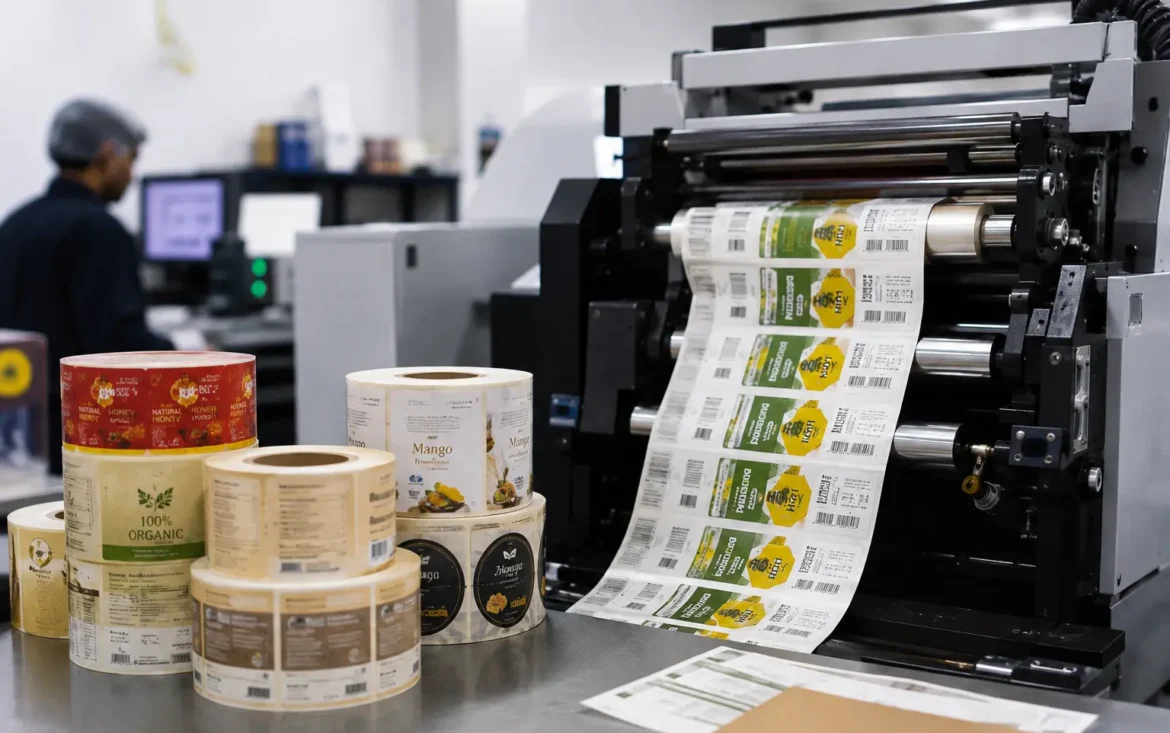
Businesses launching new products or seasonal packaging often benefit from digital printing because it allows shorter print runs, faster turnaround, and easy design updates without significant setup costs. Larger production volumes, however, may be better suited to flexographic or other high-volume printing technologies that deliver consistent quality at lower unit costs.
A dependable label printing company in Dubai should be able to recommend the most suitable printing method based on your order quantity, timeline, and application instead of relying on a single production process.
The availability of technologies such as barcode printing, QR code integration, RFID labels, and variable data printing is also becoming increasingly important as businesses invest in smarter inventory and supply chain management.
5. Strong Customisation Capabilities
Every product is different, and labels should reflect that.
Whether you’re launching a premium skincare range, shipping industrial equipment, or managing warehouse inventory, the ability to customise labels gives businesses greater flexibility.
Look for suppliers that can offer:
- Custom sizes and shapes
- Different adhesive options
- Paper, synthetic, or vinyl materials
- Matte, gloss, or textured finishes
- Variable data and barcode printing
- Roll and sheet formats
These options allow businesses to create labels that not only fit their products properly but also strengthen brand recognition and improve operational efficiency.
Customisation becomes even more valuable as businesses grow, introduce new product lines, or expand into different markets where packaging and compliance requirements may vary.
6. Barcode and QR Code Printing Accuracy Matters More Than You Think
For many businesses, a label is also a data carrier. Warehouses, retailers, logistics providers, and manufacturers depend on barcodes and QR codes for inventory control, stock movement, and product traceability.
Poor print quality can lead to scanning failures, manual data entry, shipping delays, and operational errors. In large retail chains and distribution centres, unreadable barcodes may even result in shipment rejection or unnecessary processing delays.
When evaluating a label printing company in Dubai, ask whether they test barcode readability before production. High-resolution printing, proper contrast, and accurate barcode placement help ensure labels perform reliably throughout the supply chain rather than simply looking good on the package.
7. Design Support and Pre-Press Expertise
Even a well-designed label can run into production issues if technical details are overlooked.
An experienced printing partner should review artwork before printing to identify potential problems such as:
- Incorrect bleed areas
- Low-resolution graphics
- Colour inconsistencies
- Font compatibility
- Barcode placement
- Arabic and English text alignment
This pre-production review helps prevent costly reprints while ensuring the finished label matches both brand guidelines and production requirements.
For businesses introducing new products or updating existing packaging, this level of support can save both time and unnecessary expense.
8. Flexible Production and Scalability
Business requirements rarely stay the same.
A start-up may begin with a few hundred labels, while an established manufacturer may require thousands every week. Seasonal promotions, product launches, and business growth can also increase demand unexpectedly.
Instead of choosing a supplier that only meets today’s requirements, look for one that can scale with your business.
A dependable label printing company in Dubai should comfortably handle:
- Small trial batches
- Medium production runs
- High-volume manufacturing
- Multiple SKUs
- Repeat orders with consistent quality
This flexibility allows businesses to expand without constantly searching for new suppliers whenever production volumes increase.
9. Clear Communication and Reliable Delivery
Fast production means little if deadlines are unpredictable.
Before placing an order, discuss the complete production timeline, including proof approval, printing, finishing, quality inspection, and delivery.
Reliable suppliers provide realistic schedules instead of making promises they cannot keep. They also communicate openly if artwork requires revisions or if any production issue arises.
Good communication becomes especially valuable for businesses with scheduled product launches, retail promotions, or ongoing inventory replenishment, where delays can affect sales and operations.
10. Always Request Samples Before Large Orders
One of the most common mistakes businesses make is approving large print runs based only on a digital design.
Colours displayed on a monitor rarely represent how a finished label will appear on different materials. Likewise, the adhesive strength, texture, finish, and durability cannot be judged from a PDF proof.
Requesting physical samples allows businesses to evaluate:
- Print clarity
- Colour consistency
- Material quality
- Adhesive performance
- Finish options
- Barcode readability
Testing a sample under actual operating conditions—whether in a warehouse, refrigerated environment, retail shelf, or outdoor setting—provides confidence before committing to full-scale production.
Final Thoughts
Selecting a label printing company in Dubai is about far more than finding the lowest quotation. The right partner contributes to product quality, regulatory compliance, operational efficiency, and long-term brand consistency.
From choosing materials that can withstand the UAE’s climate to ensuring barcode accuracy, bilingual layouts, and reliable production schedules, every detail plays a role in how products perform throughout the supply chain.
Businesses should view label printing as an investment rather than a routine purchase. Working with an experienced printing partner that understands local industry requirements, modern printing technologies, and customised labelling solutions can reduce operational challenges while supporting future growth.
Whether your business operates in logistics, food and beverage, manufacturing, retail, healthcare, or industrial sectors, choosing a supplier with proven expertise, quality-focused processes, and scalable production capabilities will deliver value well beyond the label itself.
In today’s competitive market, the best labels don’t just identify products—they strengthen brands, improve efficiency, and help businesses build lasting customer confidence.