-
 info@arablabels.com
- September 25, 2026
- No Comments

A product label does much more than display a brand name or product information. It needs to stay attached, remain readable, protect the printed design and maintain its appearance throughout storage, transportation, handling, and retail display. Choosing the wrong sticker material can lead to peeling, wrinkling, fading, staining or poor presentation.
For businesses involved in Sticker Printing Dubai, material selection should therefore be based on more than colour and appearance. The product type, packaging surface, storage conditions, expected lifespan, adhesive requirements and overall brand positioning all need to be considered.
Whether the packaging is for food, beverages, cosmetics, personal care products, household goods or premium items, selecting the appropriate label material can improve both packaging performance and customer perception.
Why Does Sticker Material Actually Matter?
A sticker is being asked to do several jobs at once. It’s carrying brand and product information, sure, but it’s also shielding whatever’s printed underneath from moisture, oil, scuffing, and the general wear of being picked up, packed, shipped and unpacked.
On top of that, it needs to bond properly to whatever surface it’s on — glass, plastic, cardboard or a soft flexible pouch, each of which behaves differently. Add Dubai’s specific supply chain into the mix, and labels routinely pass through air-conditioned warehouses, hot delivery vans, cold storage and humid shop floors, sometimes all within the same day.
A label that looks great fresh off the press won’t necessarily hold up once it’s been through all that. So the real starting point for choosing a material is a fairly simple question: what will this sticker actually go through, from the moment it’s applied to the point the product is finally used up or thrown away?
Start With the Product and Its Environment
Before settling on a material, it helps to map out how the product will be stored, moved around and handled once it leaves the printing facility.
A few things worth thinking through:
- Moisture and condensation — a constant issue for beverages, chilled food, skincare and anything used in a bathroom.
- Oil and chemicals — relevant for cooking oils, sauces, cosmetics, cleaning products and industrial items.
- Friction and handling — packaging that moves through warehouses and courier networks needs a surface that can take some rubbing and knocking about.
- Temperature swings — refrigerated goods need both a material and an adhesive built to hold up in the cold.
- How long the product needs to last — a short-run promotional sticker isn’t held to the same standard as a label expected to stay intact for years.
Dubai’s climate makes this kind of planning especially worthwhile. Products moving from scorching loading bays into air-conditioned storage, then into refrigeration and finally out for last-mile delivery are subjected to some fairly extreme swings in temperature and humidity along the way.
Choosing the Right Sticker Material
1. Coated Paper
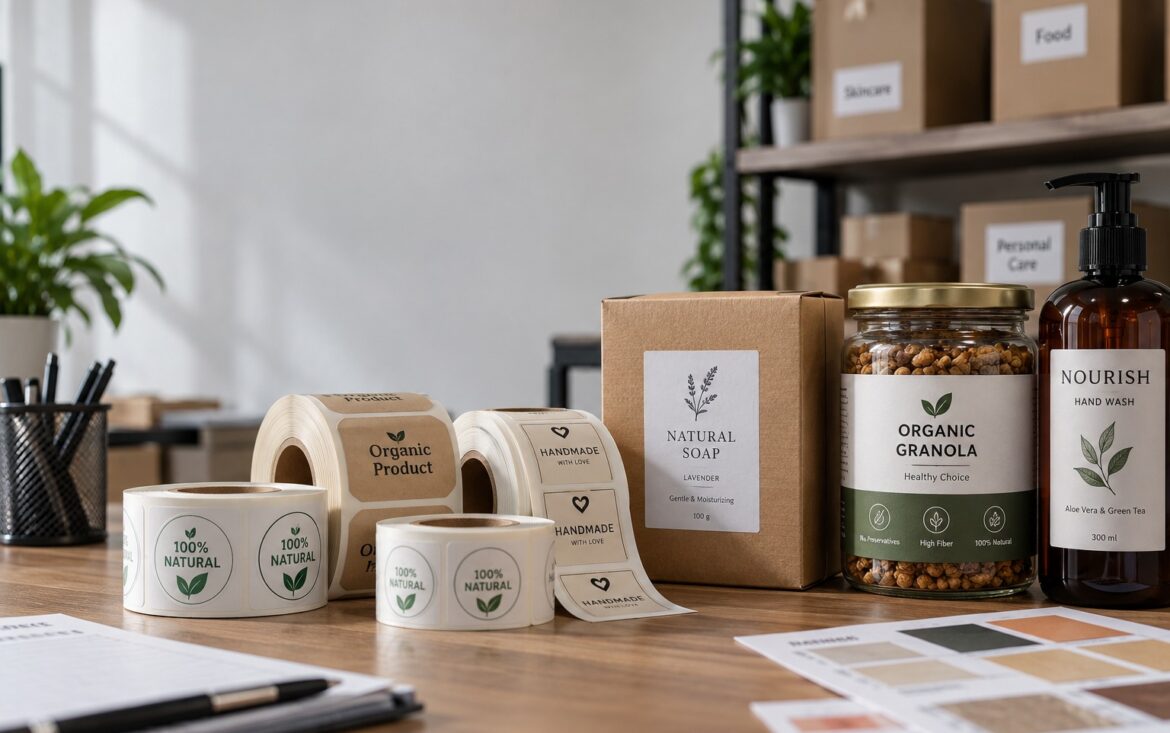
Coated paper remains a solid, budget-friendly option for dry goods and anything kept indoors. Print quality is generally good, and it’s available in matte, gloss, textured and other finishes depending on the look a brand is going for.
It tends to work well for:
- Dry-food cartons
- Gift boxes
- Candles
- Apparel packaging
- Subscription boxes
- Promotional labels
Where it falls short is moisture. Paper soaks up water, which leads to wrinkling, staining, or the adhesive simply giving up once condensation gets involved. That said, for products staying in dry, climate-controlled settings, it’s still a fair trade-off between cost and appearance.
2. Kraft and Textured Paper
Brands chasing a natural, handmade, or artisanal look often reach for kraft or textured paper. It suits speciality foods, coffee, candles, soaps and boutique goods particularly well.
The tactile quality does a lot for how premium a product feels, but the trade-off is that absorbent paper surfaces are more exposed to humidity and staining than smoother alternatives. It’s also worth remembering that a “natural-looking” material isn’t automatically the more sustainable choice — that depends on the packaging system as a whole, not just how the label feels to the touch.
3. BOPP Film
BOPP — biaxially oriented polypropylene, if anyone needs the full term — is arguably the most flexible option available for modern packaging today. It resists water, moisture, tearing and repeated handling, all while giving a smooth base for sharp, high-quality printing.
It’s a particularly good fit for:
- Food and beverage products
- Sauces and cooking oils
- Cosmetics and skincare
- Shampoo and personal-care bottles
- Refrigerated products
- Flexible packaging formats
White BOPP delivers strong colour contrast, while clear BOPP can give glass or transparent containers that clean, “no-label” appearance that’s become popular in cosmetics and beverages alike. Across most Dubai FMCG and personal-care applications, it strikes a fairly reliable balance between durability, looks and cost.
For businesses producing cosmetics labels, BOPP can be particularly useful where moisture resistance and presentation both matter.
4. Vinyl and Durable Films
For tougher jobs — where labels need serious resistance to moisture, abrasion, outdoor exposure or rough handling — vinyl and other specialist films are the better fit. Think industrial products, equipment, cleaning supplies, reusable containers and certain logistics uses.
That said, reaching for the heaviest-duty option purely because it looks more robust can drive up costs without any real benefit. The smarter approach is matching the material to what the product will actually go through, not what seems safest on paper.
Don’t Overlook the Adhesive
The face material only tells half the story. The adhesive underneath needs to suit both the packaging surface and the conditions the product will face.
Permanent adhesives are the standard choice when a label needs to stay put for the product’s entire life — food, cosmetics, household goods and traceability labels all typically call for this.
Removable adhesives, on the other hand, suit temporary promotions, price stickers, reusable containers and seasonal campaigns where the label is meant to come off cleanly later.
For chilled or refrigerated goods, a cold-temperature adhesive is often necessary, and it’s worth testing adhesion after the product has actually been refrigerated rather than trusting the spec sheet alone.
Plastic containers add another layer of complexity. Certain types of polypropylene, polyethylene and textured finishes are notoriously harder to bond to than glass or cardboard. Testing on the real container, rather than relying purely on general material specs, tends to save a lot of trouble down the line.
Think About Finish and Brand Presentation
The material chosen also shapes how the finished product looks on a shelf.
A gloss finish tends to make colours pop, which suits contemporary or high-impact designs. Matte gives a softer, more premium feel and cuts down on glare. Clear film, meanwhile, creates a minimalist look that lets the container’s own colour or texture show through.
For premium cosmetics, fragrances, gourmet foods, and gift items, specialty papers, metallic touches, foil detailing, or spot finishes can add real visual polish. It’s worth being careful with heavy metallic or reflective surfaces, though — they can interfere with barcode contrast and make small text harder to read.
Consider UAE Labelling Requirements
Packaging destined for the Dubai market also needs to meet applicable UAE labelling requirements. Depending on the product category, this can mean including both Arabic and English text, along with product details, ingredients, country of origin, storage instructions, dates and other mandatory information.
Whatever material is chosen, it needs to keep that information sharp and legible without crowding out anything required by law. It’s worth double-checking current requirements with the relevant authority or a regulatory consultant before committing to a print run, especially for products headed to multiple GCC markets.
Test Before Ordering in Bulk
Probably the single most useful step in avoiding a costly packaging mistake is running a small test batch before committing to full-scale production.
Apply the proposed sticker to the actual container and check for:
- Adhesion and any lifting at the edges
- Wrinkling or bubbling
- Colour accuracy and print sharpness
- Legibility in both Arabic and English
- Barcode and QR-code scan reliability
- How it holds up against water and condensation
- Performance under heat and humidity
- Resistance to oil, cleaning agents or abrasion, where relevant
The test should mimic the product’s actual journey through the supply chain — not just the controlled conditions of the print shop, which rarely reflect what happens after the product ships.
Final Thoughts
The best sticker material isn’t necessarily the priciest or the flashiest one available. It’s whatever holds up through the product’s entire journey while still supporting the brand’s broader packaging goals.
For anyone weighing options for Sticker Printing Dubai, the decision ultimately comes down to balancing durability, adhesive performance, moisture resistance, print quality, regulatory compliance, appearance, sustainability and cost — all at once.
Paper remains a solid choice for dry goods, while BOPP and other films offer sturdier protection for anything exposed to moisture, refrigeration, oils or heavy handling. Whichever material ends up being the right fit, testing it on the real packaging before a full production run is one of the simplest ways to avoid costly surprises and keep the customer experience consistent.